Femicore Official Website › Urinary support supplement guide
The Urinary Support Supplement Guide: What Is In This Aisle And What It Does
Urinary support supplements cluster around four ideas: cranberry proanthocyanidins interfering with bacterial adhesion, Lactobacillus strains supporting the urogenital microbiota, traditional urinary herbs such as bearberry, and antimicrobials such as berberine. Cranberry has the strongest evidence, in specific groups. Almost no finished product in the category has been trialled.
Written to be useful to somebody who buys nothing. Every claim is linked to its source in the sentence that makes it.
What people are actually trying to solve
Two different problems arrive in this aisle and they are frequently confused, which matters because the evidence differs completely between them.
Recurrent urinary tract infection. An infection is caused by bacteria and treated with antibiotics; NIDDK sets out what that involves. The supplement question here is prevention between episodes rather than treatment of one, and the AUA, CUA and SUFU guideline describes how recurrent infection is actually managed and where non-antibiotic options fit.
Bladder control: urgency, frequency, leakage. A different problem entirely, and a strikingly common one. A 2025 global prevalence meta-analysis puts overactive bladder at a level that makes it one of the most widespread conditions almost nobody discusses, and NIDDK and the Office on Women’s Health both publish frank pages on it.
The evidence for supplements is much thinner on the second than on the first, and labels in this aisle routinely address both with one sentence. That is the single most useful thing to notice before comparing any two products.
Four ideas that almost every product in this aisle is built from
Adhesion interference
Cranberry proanthocyanidins are thought to stop certain bacteria attaching to the urinary tract lining. The 2023 Cochrane review of prevention found a real reduction in repeat infection in specific groups. The companion review of treatment did not support cranberry for an infection already present.
Microbiota support
Lactobacillus strains, most interestingly L. crispatus, which dominates a healthy vaginal microbiota in most women. It has a phase 2 trial and an NEJM publication behind it, both using intravaginal delivery.
Traditional urinary herbs
Bearberry, also sold as uva-ursi, is the classic. Its arbutin is excreted in the urine, and it has been tested against an antibiotic in a randomised trial where it did not prove a satisfactory substitute.
Broad antimicrobials
Berberine is the common one. Wide laboratory activity and a well-known difficulty reaching the bloodstream. Its practical significance on a label is usually the interaction list rather than the benefit.
What the evidence actually supports, ingredient by ingredient
| Ingredient | Best evidence | In whom | What it does not support |
|---|---|---|---|
| Cranberry PAC | Cochrane review, 2023 | Women with recurrent infection, children, people having a bladder intervention | Treating an active infection; benefit in older adults in care |
| L. crispatus | Phase 2 RCT and an NEJM trial | Women with recurrent infection or recurrent bacterial vaginosis | Anything delivered by a swallowed capsule, which is not what was tested |
| Other Lactobacillus strains | Mixed, strain by strain | Varies | Being treated as interchangeable with each other |
| Bearberry | RCT against fosfomycin | Women with uncomplicated infection | Replacing an antibiotic; open-ended daily use |
| Berberine | Umbrella review | Mostly metabolic outcomes | Urinary outcomes specifically |
| Mimosa pudica | Traditional use, laboratory work | No trial population | Any specific urinary claim |
A category where the strongest single finding is a reduction in repeat infection in one defined group is not a category with nothing in it. It is a category where the specific claim matters far more than the general one.
Five questions to ask of any label in this aisle
Does it publish an amount for each ingredient?
A proprietary blend total is a ceiling rather than a distribution. It is legal and it is common, and it means no trial figure can be matched to the product. The names are still ordered by descending weight, which is the one piece of distribution information a blend cannot hide.
Is any extract standardised, and to what?
Standardised to 30% proanthocyanidin is a genuinely informative phrase, because it measures the extract against the compound the research is about. Dried herb by weight tells you much less.
Does it publish a colony forming unit count?
Live organisms are dosed in CFU. A probiotic declared only in milligrams is missing its own unit of measurement, and NCCIH makes the point that effects are both strain-specific and dose-specific.
Does it name strains, not just species?
L. crispatus is a species. LCr86 is a strain. Research is done on strains, and a label that names one is telling you something checkable.
Does it give a duration where an ingredient has one?
Bearberry is the obvious case: a short-course tradition, a formal risk assessment concerning cumulative exposure, and almost no label in the aisle printing a limit.
What has better evidence than anything in this aisle
A guide that only compared supplements to each other would be leaving out the most useful comparison available.
For stress incontinence, pelvic floor muscle training. The Cochrane review of pelvic floor muscle training against no treatment is the strongest evidence anywhere near this subject, and the intervention is free. If leakage on coughing or exercise is the problem, this is the first thing to try and a capsule is not.
For recurrent infection, a clinician and a plan. The AUA, CUA and SUFU guideline sets out what actually gets used, including prophylaxis options a supplement page will never mention because it cannot sell them.
For most people, more water and fewer assumptions. Unglamorous, free, and covered by MedlinePlus without anything attached.
None of that means a supplement is pointless. It means the honest place for one is alongside those things rather than instead of them, and any page telling you otherwise is selling.
Capsules, gummies, powders and drops in this category
Format is usually presented as a convenience question and it is partly a formulation one, which is worth knowing before comparing two products that look identical on paper.
A capsule keeps a freeze-dried organism dry and away from sugar, which is the main thing that kills one. It is also the format where a proprietary blend conceals the most, because there is no scoop to weigh and no sugar line to declare. The shell material matters: gelatin is animal-derived and a plant cellulose is not, and the Other Ingredients line is the only place that is stated.
A gummy has to carry sugar or a sugar alcohol and has to declare it, which is a rare case of a format forcing a disclosure. It is a poor home for live organisms, because moisture and heat during manufacture are exactly what reduces a viable count.
A powder gives you a scoop you can weigh and a tub you can inspect, which makes it the most transparent format by some distance, and the least convenient.
Drops suit an ingredient that absorbs under the tongue and suit almost nothing else in this aisle. A cranberry extract has no reason to be one.
For a product combining botanicals with live organisms, a capsule is the defensible choice. That is a point in favour of the format and it says nothing about what is inside it.
What a good label in this category would look like
- ✓A per-ingredient milligram figure for every botanical, not a blend total.
- ✓A standardisation figure for every extract, naming the marker compound.
- ✓A colony forming unit count per strain, at the end of shelf life rather than at manufacture, which is the number that actually reaches the buyer.
- ✓Strain designations for every organism, so the research can be looked up.
- ✓A duration limit wherever an ingredient has a traditional or assessed one.
- ✓An allergen statement, so the badge set can be checked against the formula.
- ✓A capsule shell material stated plainly, so a vegetarian mark can be verified.
- ✓A batch code and a certificate of analysis that is actually published.
Eight items, none of them expensive to print. Very few products in this aisle manage more than three, and the one sold on this website manages two and a half: it names strains, it standardises the cranberry, and it prints a capsule shell that contradicts one of its own badges. That scoring is done openly on the checklist page.
Who wrote this guide
The editorial desk of a retailer that sells one of the products this guide describes. That is a conflict of interest and the way to test it is to read the scorecard above and the checklist page, both of which apply the same standard to this website’s own product and record where it falls short.

Every page, every journal post, the bottle facts and the ingredients go through review by Dr. Susan Vogler, DO, FACOG, MSCP before they ship. We write these pages from the printed FemiCore Supplement Facts panel and the manufacturer’s own sales page, cite public research for each named botanical and each named strain, and print “not published” wherever a figure is not disclosed rather than estimating it. This panel publishes two blend totals and no amount for any of the nine names inside them, and no colony count for any strain, and that fact appears on every page where an ingredient is named. Where the seller’s marketing claims more than the label supports, we say so on the page. The Physician Formulated roundel beside this paragraph names no clinician and publishes no credential, and we treat it as a manufacturer’s statement about its own process rather than as a review. Corrections are made on the page itself and the review date moves forward. Write to [email protected]. Last reviewed September 2026 by Dr. Susan Vogler, DO, FACOG, MSCP.
Sources cited in this guide
- Williams G, Hahn D, Stephens JH, Craig JC, Hodson EM. Cranberries for preventing urinary tract infections. Cochrane Database Syst Rev. 2023;4(4):CD001321. https://pubmed.ncbi.nlm.nih.gov/37068952/
- Jepson RG, Mihaljevic L, Craig JC. Cranberries for treating urinary tract infections. Cochrane Database Syst Rev. 2023;12(12):CD001322. https://pubmed.ncbi.nlm.nih.gov/38096261/
- Babar A, Moore L, Leblanc V, et al. High dose versus low dose standardized cranberry proanthocyanidin extract for the prevention of recurrent urinary tract infection in healthy women: a double-blind randomized controlled trial. BMC Urol. 2021;21(1):44. https://pubmed.ncbi.nlm.nih.gov/33757474/
- National Center for Complementary and Integrative Health. Cranberry. https://www.nccih.nih.gov/health/cranberry
- Stapleton AE, Au-Yeung M, Hooton TM, et al. Randomized, placebo-controlled phase 2 trial of a Lactobacillus crispatus probiotic given intravaginally for prevention of recurrent urinary tract infection. Clin Infect Dis. 2011;52(10):1212-7. https://pubmed.ncbi.nlm.nih.gov/21498386/
- Czaja CA, Stapleton AE, Yarova-Yarovaya Y, Stamm WE. Phase I trial of a Lactobacillus crispatus vaginal suppository for prevention of recurrent urinary tract infection in women. Infect Dis Obstet Gynecol. 2007;2007:35387. https://pubmed.ncbi.nlm.nih.gov/18288237/
- Cohen CR, Wierzbicki MR, French AL, et al. Randomized trial of Lactin-V to prevent recurrence of bacterial vaginosis. N Engl J Med. 2020;382(20):1906-1915. https://pubmed.ncbi.nlm.nih.gov/32402161/
- Chee WJY, Chew SY, Than LTL. Vaginal microbiota and the potential of Lactobacillus derivatives in maintaining vaginal health. Microb Cell Fact. 2020;19(1):203. https://pubmed.ncbi.nlm.nih.gov/33160356/
- Reid G, Charbonneau D, Erb J, et al. Oral use of Lactobacillus rhamnosus GR-1 and L. fermentum RC-14 significantly alters vaginal flora: randomized, placebo-controlled trial in 64 healthy women. FEMS Immunol Med Microbiol. 2003;35(2):131-4. https://pubmed.ncbi.nlm.nih.gov/12628548/
- Yefet E, Colodner R, Strauss M, Gam Ze Letova Y, Nachum Z. Efficacy of oral probiotic supplementation in preventing vulvovaginal infections during pregnancy: a randomized and placebo-controlled clinical trial. Nutrients. 2024;17(1):2. https://pubmed.ncbi.nlm.nih.gov/39771026/
- National Center for Complementary and Integrative Health. Probiotics: What You Need To Know. https://www.nccih.nih.gov/health/probiotics-what-you-need-to-know
- Gágyor I, Hummers E, Schmiemann G, et al. Herbal treatment with uva ursi extract versus fosfomycin in women with uncomplicated urinary tract infection in primary care: a randomized controlled trial. Clin Microbiol Infect. 2021;27(10):1441-1447. https://pubmed.ncbi.nlm.nih.gov/34111592/
- Schindler G, Patzak U, Brinkhaus B, et al. Urinary excretion and metabolism of arbutin after oral administration of Arctostaphylos uvae ursi extract as film-coated tablets and aqueous solution in healthy humans. J Clin Pharmacol. 2002;42(8):920-7. https://pubmed.ncbi.nlm.nih.gov/12162475/
- de Arriba SG, Naser B, Nolte KU. Risk assessment of free hydroquinone derived from Arctostaphylos uva-ursi folium herbal preparations. Int J Toxicol. 2013;32(6):442-53. https://pubmed.ncbi.nlm.nih.gov/24296864/
- Liu CS, Zheng YR, Zhang YF, Long XY. Research progress on berberine with a special focus on its oral bioavailability. Fitoterapia. 2016;109:274-82. https://pubmed.ncbi.nlm.nih.gov/26851175/
- Li Z, Wang Y, Xu Q, et al. Berberine and health outcomes: an umbrella review. Phytother Res. 2023;37(5):2051-2066. https://pubmed.ncbi.nlm.nih.gov/36999891/
- Qiu W, Jiang XH, Liu CX, Ju Y, Jin JX. Effect of berberine on the pharmacokinetics of substrates of CYP3A and P-gp. Phytother Res. 2009;23(11):1553-8. https://pubmed.ncbi.nlm.nih.gov/19370549/
- Dumoulin C, Cacciari LP, Hay-Smith EJC. Pelvic floor muscle training versus no treatment, or inactive control treatments, for urinary incontinence in women. Cochrane Database Syst Rev. 2018;10(10):CD005654. https://pubmed.ncbi.nlm.nih.gov/30288727/
- Anger J, Lee U, Ackerman AL, et al. Recurrent uncomplicated urinary tract infections in women: AUA/CUA/SUFU guideline. J Urol. 2019;202(2):282-289. https://pubmed.ncbi.nlm.nih.gov/31042112/
- Zhang L, Cai N, Mo L, et al. Global prevalence of overactive bladder: a systematic review and meta-analysis. Int Urogynecol J. 2025;36(8):1573-1585. https://pubmed.ncbi.nlm.nih.gov/39951109/
- National Institute of Diabetes and Digestive and Kidney Diseases. Bladder Control Problems (Urinary Incontinence). https://www.niddk.nih.gov/health-information/urologic-diseases/bladder-control-problems
- National Institute of Diabetes and Digestive and Kidney Diseases. Bladder Infection (Urinary Tract Infection — UTI) in Adults. https://www.niddk.nih.gov/health-information/urologic-diseases/bladder-infection-uti-in-adults
- MedlinePlus, US National Library of Medicine. Urinary Incontinence. https://medlineplus.gov/urinaryincontinence.html
- Office on Women's Health, US Department of Health and Human Services. Urinary incontinence. https://www.womenshealth.gov/a-z-topics/urinary-incontinence
Questions about urinary support supplements
Do urinary supplements work?
Some ingredients have real evidence in specific groups. Cranberry proanthocyanidin reduces repeat symptomatic infection in women with recurrent infection, in children and in people undergoing an intervention on the bladder, according to the 2023 Cochrane review. Most other ingredients in the aisle have less, and almost no finished product has been trialled.
What is the best ingredient in a urinary supplement?
By weight of evidence, cranberry standardised for proanthocyanidin. By interest, Lactobacillus crispatus, which has genuine trial data, although those trials used intravaginal delivery rather than a swallowed capsule.
Can a supplement replace antibiotics for a UTI?
No. A urinary tract infection is an infection. The uva-ursi trial that tested a herb against fosfomycin did not find the herb a satisfactory substitute.
What should a urinary supplement label publish?
A per-ingredient amount, a standardisation figure for any extract, a colony forming unit count for any live organism, and a duration limit where an ingredient has one. Most labels in this aisle publish one or two of the four.
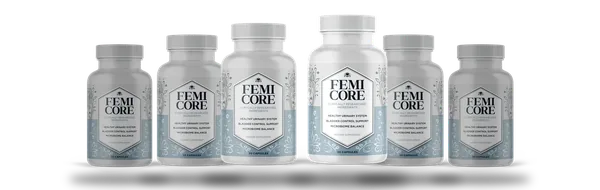
See how Femicore scores against this guide
The checklist page applies all nine points to the product sold on this website, and prints the rows it fails.
From $49 a bottle · 60 days to change your mind
Order Femicore On The Official WebsiteOne-time payment, no subscription · 60-day money-back guarantee · lot FEM-26/FE-3921 · tracking and refunds on +1 (302) 200-3480