Femicore Official Website › Blog › Cranberry evidence
Cranberry And The Two 2023 Cochrane Reviews
- Cochrane published two separate cranberry reviews in 2023: one on prevention and one on treatment. They reached different conclusions and both are correct.
- The prevention review found a reduction in repeat symptomatic infection in women with recurrent infection, in children, and in people undergoing a bladder intervention.
- It found no benefit in several other groups, including older adults in institutional care.
- The treatment review found the evidence does not support cranberry for an infection already present.
- Proanthocyanidin content is what the research measures, and FemiCore standardises to 30% without publishing the extract amount.
Two reviews, two questions, two answers
Cranberry is the most studied ingredient in this category and the most frequently misrepresented, and the reason is that there are two different questions hiding behind one word.
Prevention asks whether taking cranberry regularly makes a repeat infection less likely. Treatment asks whether taking cranberry when you already have an infection helps resolve it. They are separate questions, they have been studied separately, and in 2023 Cochrane published a review of each.
A seller quoting “Cochrane found cranberry effective” is usually quoting the first while you are asking the second. Knowing which is which is the whole skill here.
What the prevention review found, and in whom
The 2023 Cochrane review of cranberries for preventing urinary tract infections pooled the randomised evidence and found that cranberry products reduced the risk of repeat symptomatic infection in three groups: women with recurrent urinary tract infection, children, and people undergoing an intervention on the bladder.
That is a real, specific, positive finding from the most demanding review process in evidence-based medicine, and it is the reason cranberry is in almost every product in this aisle.
The same review found no benefit in several other populations, including older adults in institutional care, pregnant women, and people with bladder emptying problems. That half is quoted far less often, and it is the half that decides whether the finding applies to you.
| Group | Finding |
|---|---|
| Women with recurrent urinary tract infection | Reduced risk of repeat infection |
| Children | Reduced risk of repeat infection |
| People undergoing a bladder intervention | Reduced risk of repeat infection |
| Older adults in institutional care | No benefit found |
| Pregnant women | No benefit found |
| People with bladder emptying problems | No benefit found |
A finding in three groups and not in three others is a specific result, not a general endorsement. The first question to ask of it is which row you are in.
What the treatment review found
The companion 2023 Cochrane review of cranberries for treating urinary tract infections asked the other question, and the answer was blunter: the evidence does not support cranberry as a treatment for an infection already present.
That is worth stating clearly on a page published by somebody selling cranberry, because it is the mistake with real consequences attached. An infection is an infection and it is treated with antibiotics; NIDDK sets out what that involves. Burning, fever, back or flank pain, blood in the urine or symptoms worsening over a day or two are a call to a doctor rather than a reason to take more of a supplement.
Anybody who reaches for a cranberry product when symptoms start is applying the wrong review to their situation, and the cost of that error is measured in days.
Why the same ingredient gets two different verdicts
Because the proposed mechanism only applies to one of the questions.
Proanthocyanidins are thought to interfere with the way certain bacteria attach to the lining of the urinary tract. Something that cannot hold on is flushed out. That is a mechanism for stopping an infection getting established, which is prevention.
Once an infection is established, the bacteria are already attached and multiplying. Interfering with new attachment does very little at that point, which is why the mechanism predicts exactly the split the two reviews found. The evidence and the theory agree, which is more reassuring than either on its own.
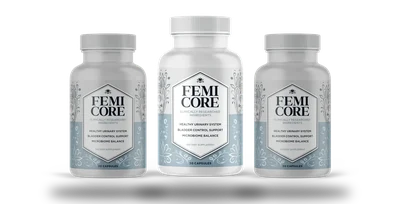
What is actually in the Femicore capsule
Nine named actives across two blends, with the research dose printed beside each one and the gaps left visible.
From $49 a bottle · 60-day guarantee
Order FemicoreProanthocyanidin: the number that matters
Cranberry juice, cranberry powder, cranberry extract and cranberry concentrate are wildly different things, and comparing them by weight is meaningless. What the research measures is proanthocyanidin content, usually abbreviated PAC.
This is why a standardisation figure on a label is genuinely informative. “Std. to 30% proanthocyanidin” says the extract has been measured against the compound the research is about, rather than sold by dried weight. It is the single most useful phrase on the FemiCore panel and it is one of the four points that product passes on the nine-point checklist.
Without a standardisation figure, two products listing the same milligrams of cranberry extract can differ by an order of magnitude in the thing that matters.
How much proanthocyanidin, and does more help?
The dose question is live rather than settled, which is itself informative.
A double-blind randomised controlled trial published in BMC Urology in 2021 compared a low dose of standardised cranberry proanthocyanidin extract against a high one, at 2 mg and 37 mg a day, in healthy women with recurrent urinary tract infection. Researchers do not design a head-to-head dose comparison unless the right amount is genuinely an open question.
What that tells a label reader is simple. The amount matters enough to have been studied directly, so a product that does not disclose its amount cannot be placed anywhere on that scale.
- A standardisation percentage tells you the concentration of the marker compound in the extract.
- An extract weight tells you how much extract is in a capsule.
- You need both to calculate the milligrams of proanthocyanidin, which is the only figure comparable with a trial.
What Femicore publishes about its cranberry
It publishes the first of those two and not the second. The panel names “Cranberry Extract (Vaccinium macrocarpon) (berry) (std. to 30% proanthocyanidin)” as the second of four botanicals in a 350 mg Herbal Blend.
Second of four, in descending order by weight, means it weighs less than the mimosa pudica seed extract and more than the bearberry and the berberine. It cannot exceed 350 mg, because nothing in the blend can. Beyond that, the extract weight is not published, so the proanthocyanidin content cannot be calculated and the trial doses above cannot be applied in either direction.
That is half a disclosure. The standardisation is real and useful, and the missing weight is what stops it being usable, which is set out in the dose table on the ingredients page.
Juice, capsule, powder: why the form changes the answer
One more source of confusion, and it explains why two people can read the same research and reach opposite conclusions about cranberry.
The trials pooled by the prevention review did not all use the same thing. Some used juice, some used capsules of extract, some used a standardised proanthocyanidin preparation. Those deliver very different amounts of the compound in question, and juice delivers a considerable amount of sugar with it.
That matters in three practical ways.
- Juice is not a low-cost substitute for an extract. Getting a meaningful proanthocyanidin dose from juice means drinking a lot of it, every day, indefinitely, which is why extracts exist at all.
- Sweetened cranberry drink is mostly not cranberry. A product labelled cranberry juice cocktail is a soft drink with some juice in it, and it is not what any of these trials tested.
- An extract without a standardisation figure is unknowable. Two capsules declaring the same milligrams of cranberry extract can differ by an order of magnitude in proanthocyanidin, which is the entire reason the figure on the FemiCore panel is worth something.
So the honest ranking of formats by how well you can evaluate them is: standardised extract with a published weight, then standardised extract without one, then unstandardised extract, then juice. This product sits second on that list, which is better than most of the aisle and short of what it could be.
What this means for a buying decision
Four things, in order of how much they should move you.
- Work out which group you are in. The prevention finding applies to women with recurrent infection, to children and to people having a bladder intervention. If none of those describes you, the strongest evidence on this panel is evidence about somebody else.
- Do not use it for an active infection. The treatment review is clear and the consequences of getting this wrong are real.
- Value the standardisation figure. It is a genuine mark of quality and most competitors do not print one.
- Price in the missing weight. You are buying an extract measured against the right compound at an amount nobody outside the factory can state.
That is a more qualified answer than a sales page would give, and it is the accurate one. The same discipline is applied to every other name on the panel, including the ones that come out worse, on the ingredients page.
Sources cited in this article
- Williams G, Hahn D, Stephens JH, Craig JC, Hodson EM. Cranberries for preventing urinary tract infections. Cochrane Database Syst Rev. 2023;4(4):CD001321. https://pubmed.ncbi.nlm.nih.gov/37068952/
- Jepson RG, Mihaljevic L, Craig JC. Cranberries for treating urinary tract infections. Cochrane Database Syst Rev. 2023;12(12):CD001322. https://pubmed.ncbi.nlm.nih.gov/38096261/
- Babar A, Moore L, Leblanc V, et al. High dose versus low dose standardized cranberry proanthocyanidin extract for the prevention of recurrent urinary tract infection in healthy women: a double-blind randomized controlled trial. BMC Urol. 2021;21(1):44. https://pubmed.ncbi.nlm.nih.gov/33757474/
- National Institute of Diabetes and Digestive and Kidney Diseases. Bladder Infection (Urinary Tract Infection — UTI) in Adults. https://www.niddk.nih.gov/health-information/urologic-diseases/bladder-infection-uti-in-adults
- National Center for Complementary and Integrative Health. Cranberry. https://www.nccih.nih.gov/health/cranberry

Every page, every journal post, the bottle facts and the ingredients go through review by Dr. Susan Vogler, DO, FACOG, MSCP before they ship. We write these pages from the printed FemiCore Supplement Facts panel and the manufacturer’s own sales page, cite public research for each named botanical and each named strain, and print “not published” wherever a figure is not disclosed rather than estimating it. This panel publishes two blend totals and no amount for any of the nine names inside them, and no colony count for any strain, and that fact appears on every page where an ingredient is named. Where the seller’s marketing claims more than the label supports, we say so on the page. The Physician Formulated roundel beside this paragraph names no clinician and publishes no credential, and we treat it as a manufacturer’s statement about its own process rather than as a review. Corrections are made on the page itself and the review date moves forward. Write to [email protected]. Last reviewed September 2026 by Dr. Susan Vogler, DO, FACOG, MSCP.