Femicore Official Website: Daily Urinary Care Capsules
"Femicore is a dietary supplement capsule for daily urinary care."
Use case: adults take one capsule a day with 6 to 8 oz of water. A bottle holds 30 capsules and lasts a month.
How it works: a 350 mg herbal blend of mimosa pudica, cranberry, bearberry and berberine joins a 50 mg blend of five Lactobacillus strains, including L. crispatus.
 Encrypted checkout
- 6 botanical extracts
- 1 capsule a day
- 30 capsules a bottle
- 3–4 weeks typical wait
- 60-day guarantee
- ✓Supports a healthy urinary system, in the wording printed inside the hexagon
- ✓Microbiome balance from five Lactobacillus strains, all five named on the panel
- ✓Bladder control support, the third line the label prints
- ✓60 days to send it back and ask for the money
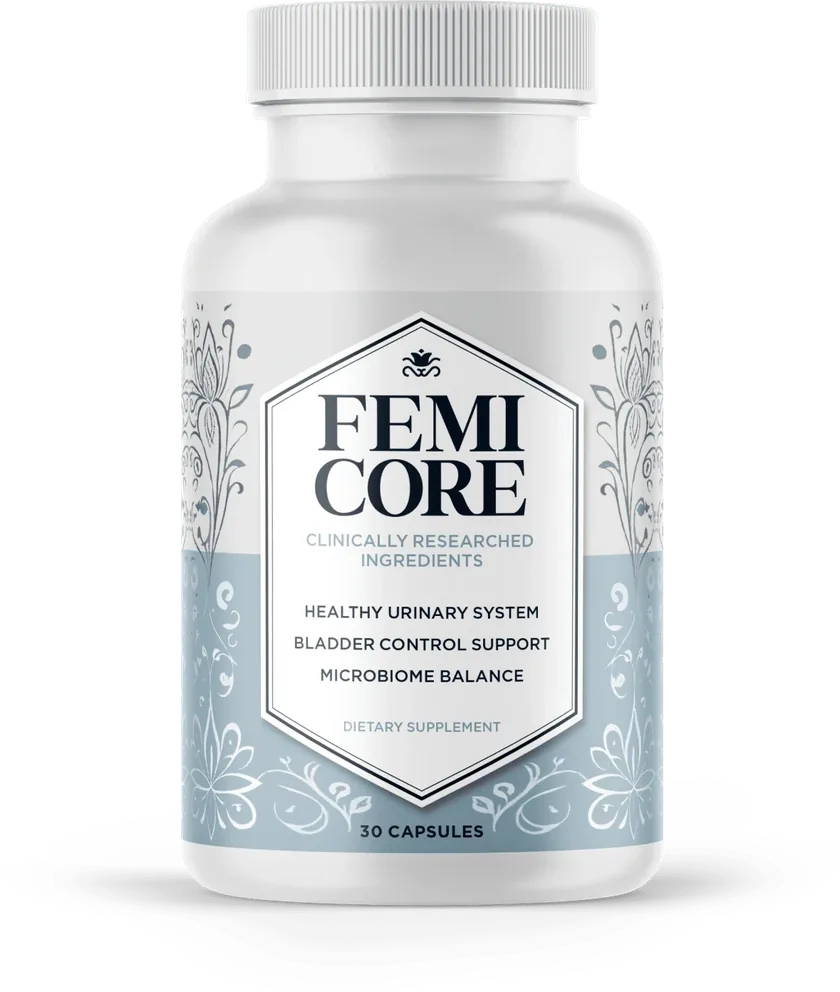






Femicore quick summary: what it is, dose and price
Femicore is a once-daily dietary supplement capsule, 30 to a bottle, with a 350 mg herbal blend and a 50 mg probiotic blend. Bottles cost $49 to $79 each, and every order has a 60-day money-back guarantee from purchase.
- Product
- Femicore, a dietary supplement in capsule form
- Form
- Capsule, 30 to a bottle. Not a gummy, not a tablet, not drops
- Serving
- One (1) capsule daily with 6 to 8 oz of water, or as a healthcare professional directs
- Supply
- One bottle is 30 days at the label serving
- Herbal Blend
- 350 mg: mimosa pudica seed, cranberry standardised to 30% proanthocyanidin, bearberry leaf, berberine HCl extract 8%
- Probiotic Blend
- 50 mg: L. crispatus LCr86, L. acidophilus LA88, L. plantarum N13, L. gasseri LG08, L. casei LC16
- Label claims
- Healthy Urinary System. Bladder Control Support. Microbiome Balance
- Stimulants
- None. No caffeine anywhere on the panel
- Other ingredients
- Gelatin (capsule), Brown Rice Flour, Magnesium Stearate, Olive Oil, Silicon Dioxide
- Audience
- Adults 18 and over. Not under 18, pregnant or nursing
- Price
- $79 a bottle for two, $69 for three, $49 for six
- Guarantee
- 60 days from purchase, all bottles and the packing slip back
- Batch
- Lot FEM-26/FE-3921, certificate of analysis reference FEM-3921-26-FE
- Distributed by
- FemiCore, 285 Northeast Ave, Tallmadge, OH 44278, United States
- Sold by
- Femicoredaily, USA Authorized Femicore Retailer
What is Femicore? A daily urinary care capsule
Femicore is a dietary supplement capsule for daily urinary care, sold 30 to a bottle. Adults take one capsule a day. Its label lists nine named actives in two blends and three claims: healthy urinary system, bladder control support and microbiome balance.
Femicore is a white capsule in a white bottle with a slate-blue band, sold thirty to a container as a one-a-day. It is made for adult women and sold here by Femicoredaily, the USA Authorized Femicore Retailer.
The routine is one capsule with a large glass of water. No timing rule, no second serving, nothing to chew and nothing to measure.
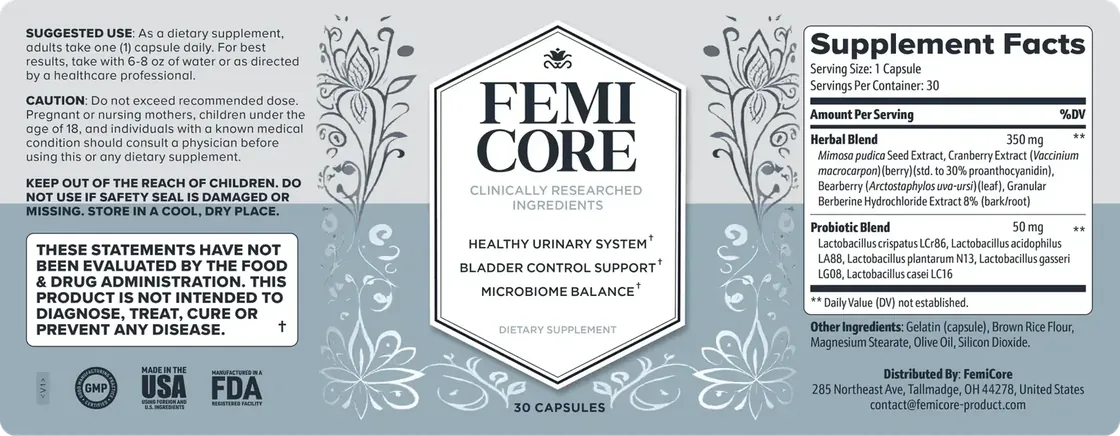
The printed panel splits the formula in two: a 350 mg Herbal Blend holding four botanicals, and a 50 mg Probiotic Blend holding five named Lactobacillus strains. Nine actives in total, and all nine are named in full.
Three lines run inside a hexagon on the front: healthy urinary system, bladder control support, microbiome balance. Those three are the claims ceiling for this whole website.
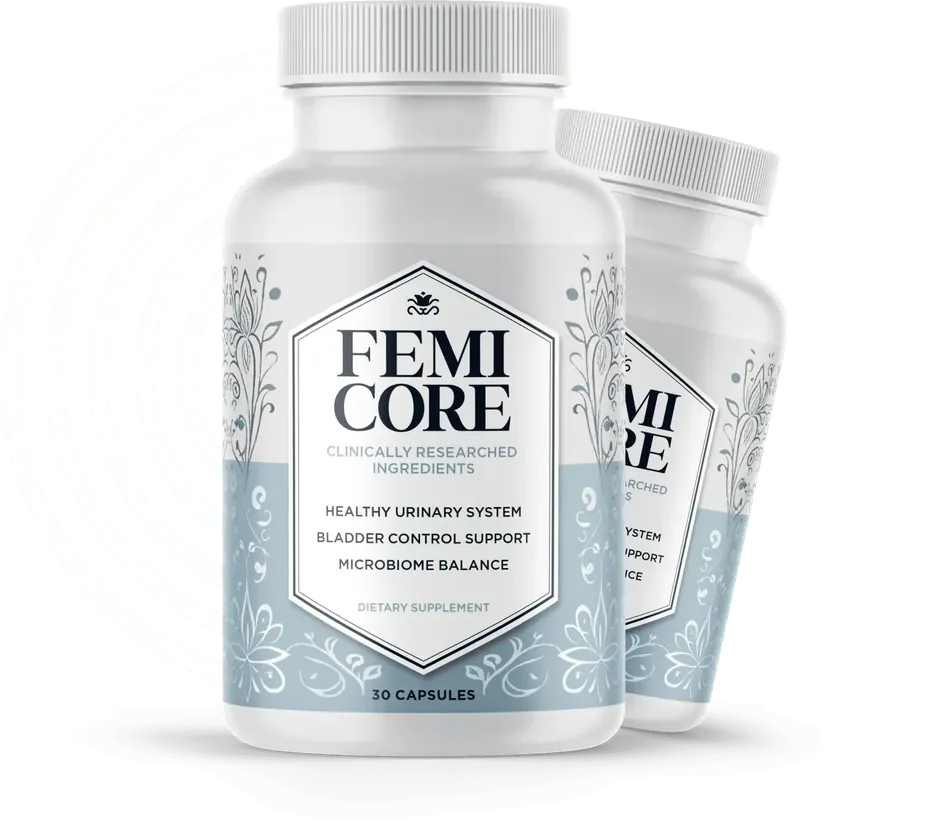
The lot on this desk is FEM-26/FE-3921, and the certificate reference is FEM-3921-26-FE. Those two codes match the bottle in your hand to the order in our book.
Get Femicore TodayWhat are the five Lactobacillus strains in Femicore for?
The five strains are L. crispatus LCr86, L. acidophilus LA88, L. plantarum N13, L. gasseri LG08 and L. casei LC16. They share a 50 mg Probiotic Blend and are there for microbiome balance. The label prints no colony count.
Turn the bottle round and the Probiotic Blend names five organisms: crispatus LCr86, acidophilus LA88, plantarum N13, gasseri LG08 and casei LC16. Those alphanumeric suffixes are strain designations, and printing them is a good sign: a seller who names a strain is telling you which organism was deposited, which is more than most labels in this aisle do.
The first of the five is the one to read about. Lactobacillus crispatus is the species that dominates a healthy vaginal microbiota in most women, and its presence is associated with a lower pH and fewer of the organisms that cause trouble (Chee and colleagues, 2020). A strain of it called CTV-05 went through a phase 1 safety trial in 2007 and then a randomised, placebo-controlled phase 2 trial in 2011 in women with recurrent urinary tract infection, and a later formulation was tested against recurrence of bacterial vaginosis and published in the New England Journal of Medicine in 2020.
The other four are familiar names with records of their own. L. acidophilus is the most studied organism in the genus, L. plantarum and L. gasseri both have urogenital colonisation literature behind them, and L. casei is a dairy-fermentation workhorse with a long safety history.
One thing to carry with you. Every crispatus trial delivered the strain intravaginally, as a suppository or an applicator. Femicore is a capsule you swallow. Swallowed lactobacilli can reach the vagina and that has been shown (Reid, 2003, and again in a 2024 randomised trial in pregnancy), but with different strains at stated doses. That is a mechanism with the specific evidence still missing, and it is the fair way to describe it.
Why do women look for a urinary support capsule like Femicore?
Urinary symptoms are common: the NOBLE survey put overactive bladder at 16.9 per cent in women. Femicore offers cranberry and five Lactobacillus strains in one daily capsule, but pelvic floor muscle training has stronger evidence for leaks.
Because the pattern is common and the options are thin. The NOBLE survey of 5,204 US adults put overactive bladder at 16.9 per cent in women, with urge symptoms rising sharply after 44.
What the supplement shelf offers in return is a hard place to shop, in four ways:
- ›Cranberry with no proanthocyanidin figure. The active fraction is what the research measures, and most labels print only the extract weight.
- ›Probiotics with no colony count. Milligrams describe powder weight, not how much of it is alive.
- ›Species without strains. “Lactobacillus acidophilus” is a species; the research is about particular deposited strains.
- ›Marketplaces are a lottery. Live organisms are heat-sensitive and a bottle that spent July in a warehouse is a different product.
Femicore answers two of those four on the label. All nine actives are named, five with their strain designation, and the cranberry carries its 30 per cent proanthocyanidin standardisation. What it does with the other two is set out in full under How is Femicore dosed?
And the first thing an evidence-based guideline reaches for is not a supplement: pelvic floor muscle training has a Cochrane review behind it for stress incontinence in a way nothing on this panel does. That is worth knowing from us rather than finding afterwards.
What form does Femicore come in?
Femicore comes as a gelatin capsule, 30 to a bottle, taken once a day with a large glass of water. It is not a gummy, a chewable, a powder or liquid drops.
Capsules, thirty to a bottle, taken one a day. Not a gummy, not a chewable, not a powder and not liquid drops.
The format matters more here than it usually does: a capsule protects a probiotic better than a chewable does. No sugar, no moisture and no chewing, and moisture is what kills a freeze-dried organism.
The shell is gelatin, which is printed in the Other Ingredients line and which makes the capsule unsuitable for anyone avoiding animal-derived products. A vegetarian-friendly mark appears in the marketing set; the label is the document with legal weight, and this website treats the capsule as non-vegetarian.
How much Femicore is one serving?
One serving of Femicore is one capsule a day with 6 to 8 oz of water. Each capsule holds a 350 mg Herbal Blend and a 50 mg Probiotic Blend, 400 mg in total, and one bottle lasts 30 days.
| Figure | Where it comes from | Value |
|---|---|---|
| Capsules a day | The printed direction | One |
| With | The printed direction | 6 to 8 oz of water |
| Capsules a bottle | Printed on the front label | 30 |
| Days a bottle lasts | Thirty capsules at one a day | 30 |
| Herbal Blend a day | Printed on the panel | 350 mg across four botanicals |
| Probiotic Blend a day | Printed on the panel | 50 mg across five strains |
| Total actives a day | The two blend totals added | 400 mg |
| Servings in a six-bottle pack | Six bottles, thirty days each | 180 |
That is the figure to set a reminder by, and the one every pack on this page is priced around. How the 400 mg divides between the nine names is answered under How is Femicore dosed?
The water is not decoration. The label asks for 6 to 8 oz and the reason is specific to this panel: a bearberry product works through the urine, so fluid is part of the mechanism rather than an afterthought.
What are the ingredients in Femicore?
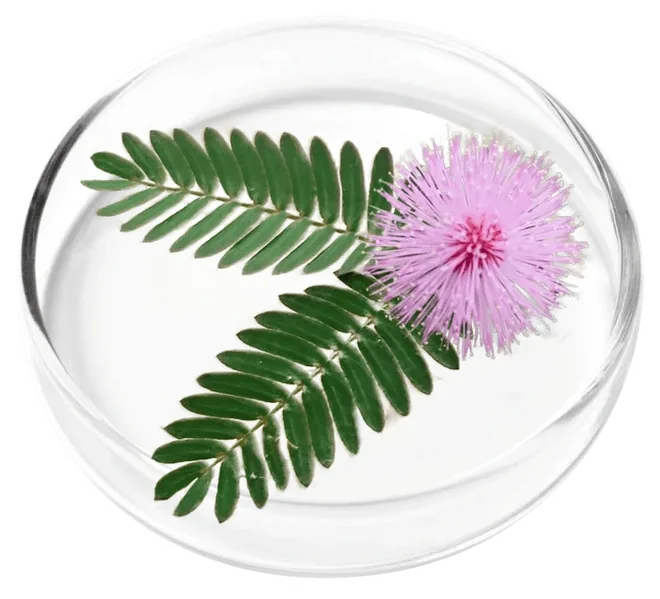
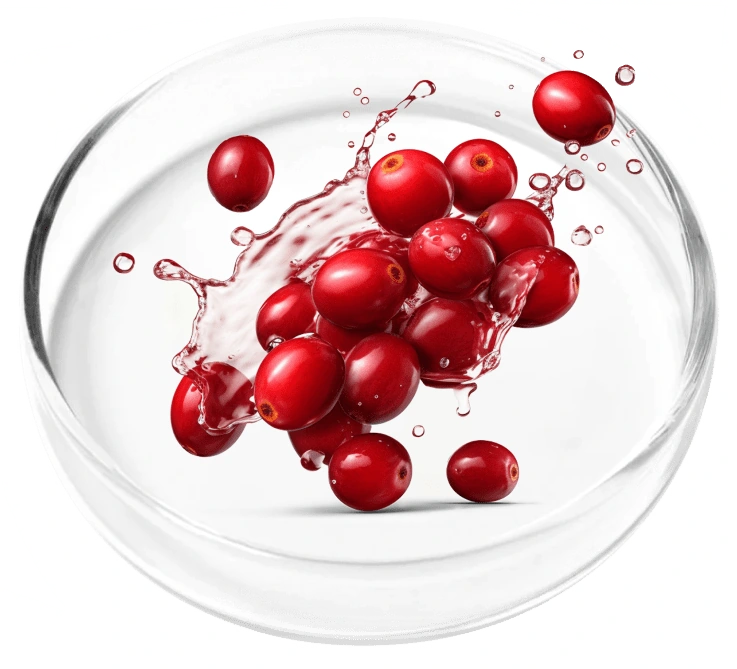
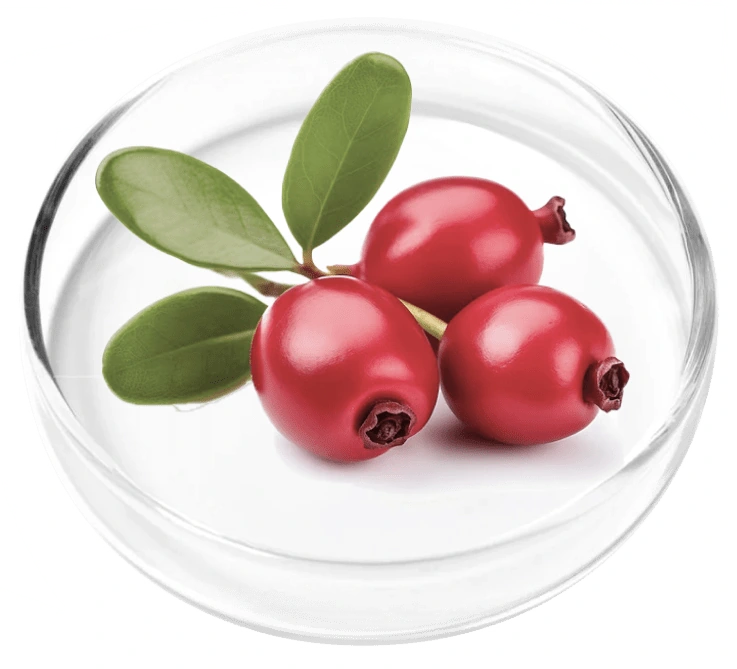
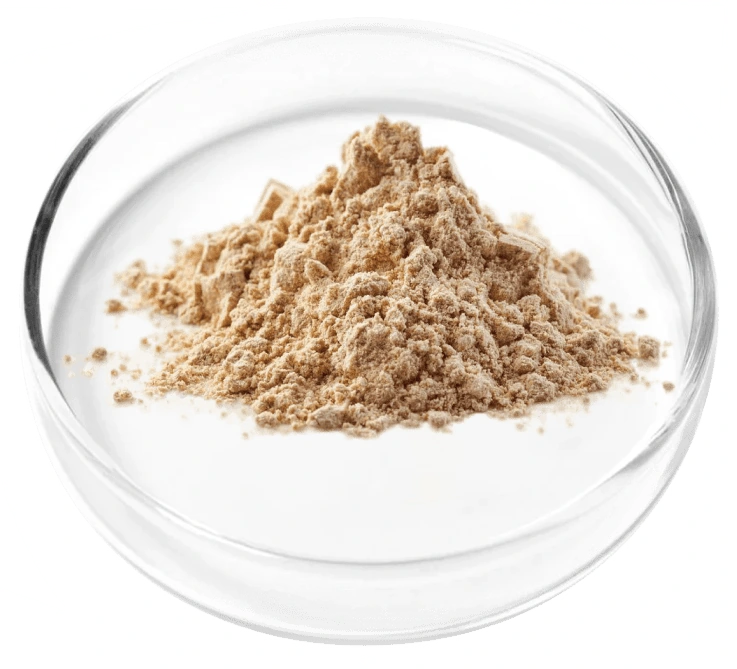
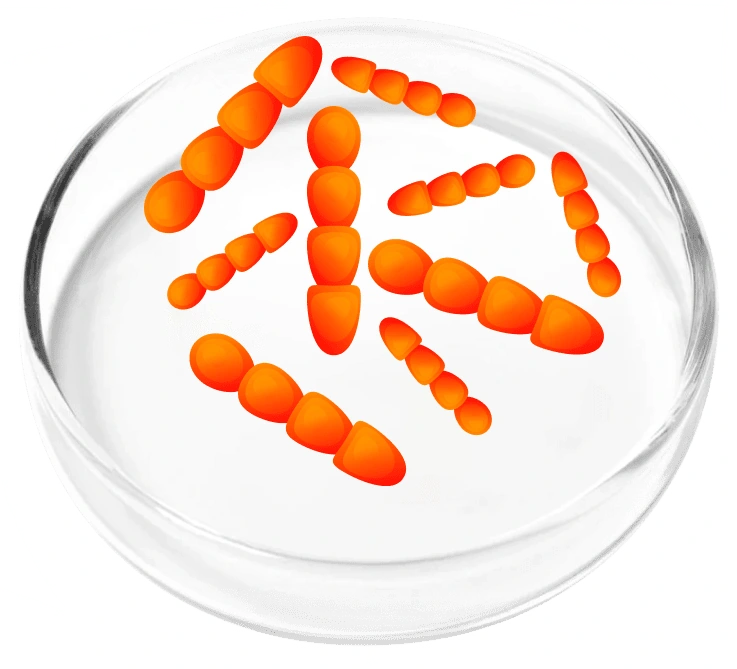
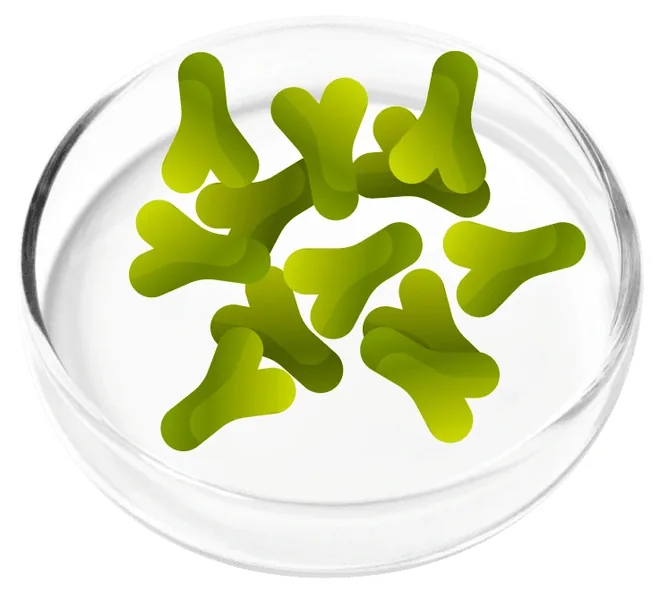
Femicore lists nine named actives in two blends: mimosa pudica seed, cranberry, bearberry leaf and berberine in a 350 mg Herbal Blend, and five Lactobacillus strains in a 50 mg Probiotic Blend. No single amount is published.


| Blend | Total | What is inside it |
|---|---|---|
| UTI Herbal Blend | 350 mg | Mimosa pudica seed extract · cranberry extract standardised to 30% proanthocyanidin · bearberry leaf · granular berberine hydrochloride extract 8% |
| Probiotic Blend | 50 mg | L. crispatus LCr86 · L. acidophilus LA88 · L. plantarum N13 · L. gasseri LG08 · L. casei LC16 |
Regulation requires the names inside a blend to run in descending order by weight, so mimosa pudica outweighs berberine here and crispatus LCr86 outweighs casei LC16. Each active gets a full evidence write-up on the Femicore ingredients page.
Cranberry is the item with the strongest positive review behind it and the only one carrying a standardisation figure. Bearberry is the traditional urinary herb of the group, berberine is here as an 8 per cent extract, and mimosa pudica is first on the panel and the least studied thing on it.
How does Femicore work?
Femicore works through four proposed routes: cranberry may interfere with bacteria attaching to the urinary tract, probiotic strains may colonise the urogenital tract, bearberry has traditional use, and berberine has broad laboratory activity. None of it is a promise.
Adhesion, the cranberry route
Cranberry proanthocyanidins are thought to interfere with the way certain bacteria attach to the lining of the urinary tract. The 2023 Cochrane review of cranberry for prevention found a reduction in recurrent infection in women with recurrent infection, in children, and in people undergoing a bladder intervention.
Colonisation, the probiotic route
The proposal is that swallowed lactobacilli reach and populate the urogenital tract. Crispatus LCr86 has the best case, and NCCIH is clear that probiotic effects are strain-specific and dose-specific.
Antimicrobial, the bearberry route
Bearberry leaf carries arbutin, which is metabolised and excreted in urine as hydroquinone conjugates, where it has a long traditional antiseptic reputation. A 2021 randomised trial against fosfomycin tested a standard uva-ursi extract in uncomplicated infection and did not find it a replacement for the antibiotic.
Broad activity, the berberine route
Berberine has wide laboratory activity against bacteria and a well-documented difficulty reaching the bloodstream (Liu and colleagues, 2016), which in a gut-and-urinary product is arguably the point.
The fair summary. Femicore combines one ingredient with a genuine prevention review behind it, one strain with a genuine trial record in a different dose form, and two botanicals with real traditional use and modest modern support. None of that is nothing, and none of it is a promise. Route by route on the how it works page.
How long does Femicore take to work?
Buyers on this desk most often describe 3 to 4 weeks before noticing anything. A probiotic establishes itself slowly, and the five-star reviews on file were written between day 30 and day 58. Individual results vary.
| Period | What is happening | What buyers report |
|---|---|---|
| Days 1 to 7 | The capsule is a habit and nothing more. A probiotic has not established anything in a week and cranberry prevention studies run for months. | Very little, and this is where the four-star reviews come from. |
| Weeks 2 to 4 | The window this desk’s record points at. 3–4 weeks is the most common answer when buyers are asked when they noticed anything. | The first positive reports appear. The earliest five-star review on record was written on day 30. |
| Weeks 5 to 8 | Where the five-star reviews cluster: days 47, 56, 57 and 58 of the eight on file. | The common sentence is that the habit stuck and they reordered before the last bottle. |
| Day 60 | The refund window closes. This is the decision point, not the halfway mark. | The most representative line in the record was written on day 60, and it is a four-star review. |
Individual results vary and these are buyer-supplied accounts rather than evidence.
Two bottles reach day 60 with a few capsules spare. Three reach it with a month in hand. Six reach it with four months of a capsule you will already have decided about, which is why this desk recommends three on a first order even though it earns less on three than on six.
What does Femicore do? Benefits and label claims
Femicore carries three label claims: healthy urinary system, bladder control support and microbiome balance. They describe support for a body process, not a promised outcome, and Femicore does not replace pelvic floor muscle training or a doctor's care for an infection.

Three lines are printed inside the hexagon on the front of the bottle, and they are the whole of what this product claims:
- ›Healthy Urinary System
- ›Bladder Control Support
- ›Microbiome Balance
Each carries a dagger pointing at the FDA statement printed beside it. All three are statements about a process rather than promises about an outcome, which is what a dietary supplement is allowed to say.
Does Femicore support a healthy urinary system?
The first printed line, and the one cranberry proanthocyanidin carries. What the Cochrane review supports is fewer recurrences in specific groups rather than a general urinary tonic effect, and that distinction is worth holding on to.
Does Femicore support bladder control?
The second line, and the broadest of the three. It is offered as support for a function the body already performs. If urgency or leakage is your reason for buying, read the what it does not do section before you order, and read the pelvic floor evidence with it.
Does Femicore support microbiome balance?
The third line and the one this page leads with. It is the claim the five strains exist to carry, and the reason the strain designations on the panel are worth something.
What does Femicore not do?
It does not treat a urinary tract infection, which is treated with antibiotics (NIDDK). It does not cure or prevent incontinence, and it does not replace pelvic floor muscle training.
How is Femicore dosed?
Femicore is dosed at one capsule a day: a 350 mg Herbal Blend plus a 50 mg Probiotic Blend. The label prints only these two totals, with no amount for each of the nine names and no colony forming unit count.
Time for the part most pages in this category skip. Start with what this label does better than its shelf: nine actives named in full, five with a strain designation, and a standardisation figure on the cranberry. Most bottles in this aisle name a species and stop. Now the four things that cost Femicore something, in one place.
| Serving Size | 1 Capsule |
|---|---|
| Servings Per Container | 30 |
| Herbal Blend | 350 mg † |
| Mimosa pudica Seed Extract, Cranberry Extract (Vaccinium macrocarpon) (berry) (std. to 30% proanthocyanidin), Bearberry (Arctostaphylos uva-ursi) (leaf), Granular Berberine Hydrochloride Extract 8% (bark/root) | |
| Probiotic Blend | 50 mg † |
| Lactobacillus crispatus LCr86, Lactobacillus acidophilus LA88, Lactobacillus plantarum N13, Lactobacillus gasseri LG08, Lactobacillus casei LC16 | |
| † Daily Value (DV) not established. | |
| Figure | What the label gives you |
|---|---|
| Ingredient names | All nine, in full, with Latin binomials and strain codes |
| Cranberry standardisation | 30 per cent proanthocyanidin, printed |
| Blend totals | 350 mg and 50 mg |
| Serving and container count | One capsule, thirty servings |
| Other ingredients and shell | The full list, gelatin named first |
| Distributor address | FemiCore, 285 Northeast Ave, Tallmadge, OH 44278, United States |
| Amount of each of the nine | Left to the manufacturer. A blend total is a ceiling, not a distribution |
| Colony forming units | Left to the manufacturer, for the blend and every strain in it |
| Proanthocyanidin milligrams | Follows from the cranberry amount, inside the blend |
| The laboratory certificate | Held by the manufacturer; this desk holds the reference FEM-3921-26-FE |
Six rows of ten are printed in full. The four that are not are named here rather than scattered through the page, and none is estimated.
Why the colony count is the number that matters most
Probiotics are dosed in colony forming units, the count of live organisms in a serving. Milligrams describe powder weight, not how much of it is alive. NCCIH makes the same point: effects are strain-specific and dose-specific, so a product publishing neither figure cannot be compared with anything. We would rather print that than fill the gap with an estimate, and if the manufacturer publishes a count this page will carry it.
Three more places the paperwork disagrees with itself
- ›The retailer’s summary sheet names six of the nine. The printed panel adds plantarum N13, gasseri LG08 and casei LC16, and the panel is the document with legal weight, so all nine are published here.
- ›A vegetarian-friendly mark appears in the marketing set. The Other Ingredients line names gelatin. Both cannot be true, and this website treats the capsule as non-vegetarian.
- ›The sales page describes the capsule as addressing toxic dioxins and as helping to prevent bladder leaks. Neither appears on the bottle, and the second is a prevention claim a supplement may not make. This website carries neither.
Bottom line on dosing. Nine names, five strain codes and a cranberry standardisation is a better label than most of this aisle produces. What it will not let you do is compare this bottle with a trial. If those figures are a condition of your purchase, walk away. If not, sixty days lets you judge it on your own routine instead of on a number.
How to Take Femicore: dosage and directions
Take one Femicore capsule a day with 6 to 8 oz of water. There is no morning or evening rule and no with-food rule. One bottle lasts 30 days, and buyers most often describe 3 to 4 weeks before noticing anything.
One capsule, once a day
The printed instruction is one (1) capsule daily. There is no morning or evening preference and no with-food rule. Pick the time you are least likely to skip and keep it there.
With 6 to 8 oz of water
The label asks for it, and on a bearberry panel fluid is part of how the product is meant to work rather than an afterthought.
Read the bottle you received
Artwork changes between runs. The bottle in your hand is the instruction that counts, and where it disagrees with anything here, it wins.
Count in weeks, not days
Buyers on this desk most often describe 3–4 weeks before noticing anything. A probiotic that has to establish itself is the slowest part of the panel.
Diarise day 50
The refund window is 60 days and the return asks for all the bottles back. A note in the calendar keeps the decision yours.
One thing the label does not say and should. Bearberry is traditionally taken as a short course rather than continuously, and this label gives no duration limit at all. If you intend to take Femicore for six months, that is the one question to settle before you start. The reasoning is on the Femicore side effects page.
Is Femicore safe? Side effects and cautions
For a healthy adult over 18 with no prescription medicine, Femicore is an ordinary capsule to take. Two cautions apply: bearberry is traditionally a short course, and berberine can raise blood levels of some medicines. Ask a pharmacist first.
For a healthy adult over 18 with no prescription medicine in the house, a botanical and probiotic capsule at 400 mg a day is an ordinary thing to take. Two items on this panel carry cautions a general wellness page would skip, and they are printed here in full.
| Ingredient | What to know | Who should ask first |
|---|---|---|
| Bearberry (uva-ursi) | Traditionally a short course rather than an open-ended daily herb, over hydroquinone exposure that has been formally risk-assessed. | Anyone planning to take it for months, or with kidney or liver disease. |
| Berberine | Inhibits CYP3A4 and P-glycoprotein, so it can raise blood levels of medicines cleared by those routes (Qiu, 2009). It also lowers blood glucose (umbrella review, 2023). | Anyone on prescription medication of any kind, and anyone on diabetes medication. |
| Cranberry | Well tolerated. Gastrointestinal upset is the usual report. An interaction with warfarin has been discussed for years without a settled answer. | Anyone on warfarin. |
| Mimosa pudica | The thinnest human safety record on the panel, simply because very little modern work exists. | Anyone who wants published human safety data before swallowing something. |
| The five Lactobacillus strains | Generally well tolerated in healthy adults. Bloating and wind in the first days are the common reports. | Anyone immunocompromised or with a central line, for whom NCCIH advises caution with live organisms. |
Longer version on the Femicore side effects and interactions page.
The berberine point, restated because it is the one that can matter. CYP3A4 handles a large share of prescription medicines. If you take anything on prescription, this is a five-minute conversation with a pharmacist before the first capsule rather than a reason to panic after the thirtieth.
Who is Femicore for, and who should not take it?
Femicore suits adults over 18 who will take a capsule daily for two months. It is wrong for anyone under 18, pregnant or nursing, on certain prescriptions, with kidney or liver disease, or avoiding animal-derived products.
Femicore may fit you if
- You are an adult over 18 who will take a capsule daily for two months.
- You are interested in the cranberry and probiotic approach and have read what the research covers.
- You have already spoken to a clinician about a recurring pattern and want something alongside that conversation rather than instead of it.
- You want the strain designations printed rather than a species name.
- You will diarise day 50 and use the window if the answer is no.
Femicore is wrong for you if
- You are under 18, pregnant or nursing. The printed caution names both groups.
- You take a prescription cleared by CYP3A4 or moved by P-glycoprotein, and that list is long.
- You have kidney or liver disease, and should not be taking a bearberry product open-endedly at all.
- You avoid animal-derived products. The shell is gelatin.
- You have symptoms of an active infection. That is a call to a doctor, not an order for a capsule.
The full version, including the interaction list and the reason bearberry has a duration limit, is on the who it is for page.
Femicore reviews: what do buyers on this desk report?
This desk's own order book shows 4.7 out of 5 from 739 written reviews across 9,675 orders, with 86% recommending. It is this retailer's score, not a global one, and reviews are buyer-supplied, not typical results.

4.7 out of 5, from 739 written reviews across 9,675 orders, with 86% saying they would recommend it. That is this retailer’s own book, not a global score for the product.
The record gives eight people in detail and two review texts between them, which makes them summary categories rather than transcripts. They are published as counted themes, and this page’s structured data carries no individual review nodes: eight nodes on two texts would assert eight reviews that do not exist.
The record also arrived with eight male first names attached to a women’s urinary product, so the names are not published. Every other field is printed exactly as supplied.
“Daily habit stuck” · 5 of 8 reviewers
Five of the eight reviewers on this desk’s record carry the identical sentence: the once-a-day routine held and they reordered before the last bottle ran out. All five wrote between day 30 and day 58, and all five gave five stars.
“Fair at a month, wanted more in week one” · 3 of 8 reviewers
Three reviewers carry the other sentence and all three gave four stars. They wrote on days 17, 28 and 60. It is the most useful line in the record, because it says the first week is where expectation and this capsule part company.
Liked most: the once-a-day capsule, and the 60-day window. Liked least: a slow start, and wanting more inside the first week. Most ordered pack: 6 bottles. Testimonials are buyer-supplied individual experiences, are not typical results, and are not evidence that the product works. The full roster is on the Femicore reviews page.
What are the common Femicore complaints?
The four common Femicore complaints are a slow first week, no colony count printed, a gelatin shell under a vegetarian mark, and a sales page that claims more than the bottle. None is about late delivery or a refused refund.
“Week one did nothing.”
Three of the eight reviewers on record say a version of it, all three giving four stars. It is also predictable: a probiotic has not established anything in seven days. Two bottles is a thin test; three fits inside the window.
“No colony count is printed.”
Fair, and the strongest point against this product. For a capsule whose third claim is microbiome balance, the live count is the number a buyer most needs. The counterweight is the strain designations, which most labels also withhold.
“The shell is gelatin under a vegetarian mark.”
Also true, and this desk publishes the label rather than the marketing set. It is a labelling error rather than a safety one, and it matters to anyone who avoids animal-derived products for dietary or religious reasons.
“The sales page claims more than the bottle.”
True. The bottle prints three structure and function lines; the sales page adds leak prevention and toxic dioxins. Neither of those appears anywhere on this website, and the bottle is the document we publish.
None of the four is a complaint that the product arrived late, that a refund was refused, or that a subscription started without permission, which are the three that would change this desk’s recommendation.
How does Femicore compare to other options?
Femicore combines four botanicals and five probiotic strains in one daily capsule. A cranberry-only capsule usually prints its full amount, and a vaginal probiotic usually prints a colony count. Femicore prints blend totals only.
| Feature | Femicore | A cranberry-only capsule | A vaginal probiotic |
|---|---|---|---|
| Format | One gelatin capsule a day | One or two capsules a day | A capsule, or a suppository |
| Botanicals | Four, named in full | One | None |
| Probiotic strains | Five, each with its designation | None | One to four, usually designated |
| Cranberry standardisation printed | Yes, 30% proanthocyanidin | Frequently | Not applicable |
| Per-ingredient amounts printed | Blend totals only | Usually the full amount | Usually a CFU figure |
| Colony count printed | No | Not applicable | Usually yes |
| Route the research used | Oral, for the botanicals | Oral, matching the trials | Often intravaginal, matching the trials |
| Suitable if you avoid gelatin | No | Varies | Varies |
| Refund window | 60 days from purchase | Varies by seller | Commonly 30 days |
| Batch traceable to your order | Yes, lot FEM-26/FE-3921 | Rarely | Rarely |
Three rows go against Femicore and they are printed at the same size as the rest.
Those three rows are worth weighing. A cranberry-only capsule tells you how much proanthocyanidin you are getting; a dedicated vaginal probiotic prints a colony count and often uses the route the trials used. Neither gives you nine actives in one capsule. What Femicore is buying you is breadth in one daily habit; what it is costing you is the ability to check any single amount.
Is Femicore worth it? Femicore pros and cons
Femicore's strengths are nine named actives, five strain designations, one capsule a day and 60 days to send it back. Its weak points are no per-ingredient amounts, no colony count and a gelatin shell.
What works well
- Nine actives named in full, with Latin binomials on the botanicals.
- Five strain designations printed, which most labels in this aisle withhold.
- A cranberry standardised to 30 per cent proanthocyanidin, and the figure printed.
- One capsule a day with water, and no routine to build around it.
- No stimulant anywhere on the panel, which matters in a bladder product.
- A capsule rather than a chewable, which is the right format for live organisms.
- Sixty days to send it back, double what this shelf usually offers.
- A lot number and certificate reference matched to your order.
What could be better
- No amount is published for any of the nine names, only two blend totals.
- No colony forming unit count, which is the key figure for the probiotic half.
- The shell is gelatin, under a vegetarian-friendly mark in the marketing set.
- The retailer’s summary sheet names six of the nine actives.
- The sales page claims more than the three lines printed on the bottle.
- No single-bottle option, so the smallest order is two.
- Nothing here acts inside a week, and the first fortnight rarely satisfies.
Femicore Price: how much does it cost?
Femicore costs $79 a bottle for two bottles ($158 plus $9.99 shipping), $69 for three ($207) and $49 for six ($294), with free US shipping on the three and six packs. The six-bottle pack adds three bonus guides.
2 bottles
60-day supply
$158 total
6 bottles
180-day supply
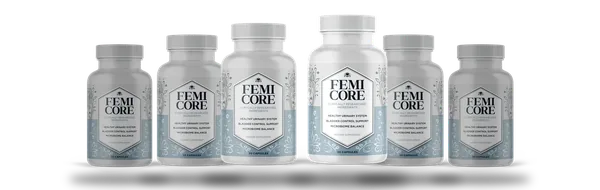

$294 total
3 bottles
90-day supply
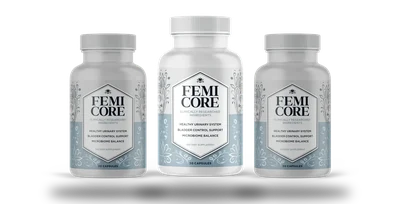

$207 total
Read the saving figures with one eye open. All three imply a list price of $179 a bottle. Nobody is selling this capsule at $179, and a discount measured against a price that is never charged is a comparison to a list rather than to a recent selling price. The real decision is between $79, $69 and $49 a bottle.
And the recommendation, which costs us money. Three bottles. Ninety days covers the 60-day guarantee with a month in hand, so you can decide on evidence rather than on a deadline. Six bottles is four months of something you will already have made your mind up about.
Femicore cost per day: the real cost of a routine
A Femicore routine costs about $2.80 a day on two bottles, $2.30 on three and $1.63 on six, counting shipping where it is charged. The three-bottle pack is the only one that covers the 60-day guarantee with room to think.
| Pack | Per bottle | Total | Shipping | Per day | Covers 60 days? |
|---|---|---|---|---|---|
| 2 bottles | $79 | $158 | $9.99 | $2.80 | Just, with nothing spare |
| 3 bottles | $69 | $207 | Free | $2.30 | Yes, with 30 days in hand |
| 6 bottles | $49 | $294 | Free | $1.63 | Yes, with 120 days past the decision |
Per-day figures divide the total, including shipping where it is charged, by the number of capsules. The six-bottle pack is genuinely the cheapest per capsule, and that is exactly the arithmetic a seller wants you to run before you know whether the capsule suits you.
Once shipping is counted the gap between the two-bottle and three-bottle packs is under ten dollars a month of supply, and the three is the only pack that covers the guarantee with room to think.
What comes with a six-bottle Femicore order?
The six-bottle Femicore pack comes with three digital guides: a relationship guide, a gut guide and a mobility guide. They are included with the six-bottle pack only, and none of them is about the urinary tract.



How to weigh a $793 bundle. The three listed values add to more than the six-bottle order costs. A digital file has no marginal cost, so a listed value on one is a marketing figure rather than a price anyone pays. Treat the guides as a pleasant extra and buy the bottle count that fits your 60-day window, which is the argument the bonuses page makes at length.
Where to Buy Femicore Online
Buy Femicore online through this website, the USA Authorized Femicore Retailer, using the order links that open the encrypted checkout. A bottle bought elsewhere cannot be traced to lot FEM-26/FE-3921 and is not covered by the 60-day guarantee.

Femicore is sold through this website, which is the USA Authorized Femicore Retailer. Femicoredaily does not supply pharmacies, supermarkets or gyms, and does not operate a marketplace storefront. A bottle bought anywhere else cannot be traced to lot FEM-26/FE-3921 through this desk, and it is not covered by the 60-day guarantee described on these pages.
Orders go through the checkout. The number at the top of this page is the desk that handles tracking, address changes and refunds after an order exists, and nobody here will take card details over the telephone.
- ›Order desk: +1 (302) 200-3480
- ›Website desk: [email protected], Mon–Fri 9:00am–5:00pm ET. It cannot see orders.
- ›Office: 222 Broadway, Suite 1901, New York, NY 10038, USA
- ›Returns: 270 Lafayette Street, Suite 1203, New York, NY 10012, USA
Is Femicore a scam?
No, in the sense people usually mean. There is a real capsule with a printed panel, a real manufacturer with an address on the label, a refund route that works and a desk that answers a telephone. What is fair to criticise is the label withholding its amounts and a sales page that claims more than the bottle, and both are set out in full in the dosing section above.
Can I order Femicore by phone?
No. Orders go through the order link only. The desk on +1 (302) 200-3480 handles tracking, address changes, cancellations and refunds once an order exists.
What the Femicore artwork shows
The Femicore artwork shows four things: the printed panel, the seller's four-step explanation, the nine ingredient names and the badge row. The printed panel is the document every figure on this website is read from.



Final verdict: is Femicore worth considering?
Femicore scores 3.5 out of 5 from this desk. It is a reasonable thing to try for sixty days if you want one capsule a day and value printed strain codes, but skip it if you need a colony count or avoid gelatin.
| Strain panel and naming | 4.0 / 5 |
|---|---|
| Label transparency | 1.5 / 5 |
| Format and ease of use | 4.5 / 5 |
| Value for money | 3.5 / 5 |
| Guarantee and protection | 4.0 / 5 |
| Evidence in the category | 3.5 / 5 |
| Overall | 3.5 / 5 |
For an adult woman who wants one capsule a day, who has already had the conversation with a clinician, and who values seeing five strain designations and a cranberry standardisation on a label, Femicore is a reasonable thing to try for sixty days. The breadth of the panel is the best part of it.
Skip it if the colony count is a condition of your purchase: that is a legitimate requirement and this label does not meet it. Skip it if you avoid gelatin, and skip it if you take a prescription cleared by CYP3A4, which berberine inhibits.
If you do try it, take the three-bottle pack. This desk earns more on the six, and the three is still the right first order.
Who writes and reviews these Femicore pages?
Femicoredaily writes every Femicore page from the printed label, cites public research for each ingredient and prints not published where a figure is missing. The named physician reviewer checks the pages before they ship, and corrections move the date forward.
Four claims a sceptical reader can audit in ten minutes, which is the only reason worth making them:
- The printed panel is the source. The three claim lines, the two blend totals, the nine names, the capsule count and the serving instruction are read off the FemiCore label photograph in our own asset folder.
- Not published stays not published. The per-ingredient amounts and the colony count sit with the manufacturer, and nothing undisclosed is estimated anywhere on this website, including in the structured data a machine reads.
- Sources are real and linked in the sentence. Every study was confirmed against its PubMed record before it was written down, and every government page was checked against its own site root first.
- Corrections change the date. Write to [email protected] and the review date moves forward.
We earn when you buy. Femicoredaily is the Femicore retail desk named at the top of this page, and this website makes money on orders placed through it. That is exactly why the dosing section, the bearberry duration limit and the recommendation of the three-bottle pack over the six are here: they are where our interest and yours pull apart.

Every page, every journal post, the bottle facts and the ingredients go through review by Dr. Susan Vogler, DO, FACOG, MSCP before they ship. We write these pages from the printed FemiCore Supplement Facts panel and the manufacturer’s own sales page, cite public research for each named botanical and each named strain, and print “not published” wherever a figure is not disclosed rather than estimating it. This panel publishes two blend totals and no amount for any of the nine names inside them, and no colony count for any strain, and that fact appears on every page where an ingredient is named. Where the seller’s marketing claims more than the label supports, we say so on the page. The Physician Formulated roundel beside this paragraph names no clinician and publishes no credential, and we treat it as a manufacturer’s statement about its own process rather than as a review. Corrections are made on the page itself and the review date moves forward. Write to [email protected]. Last reviewed September 2026 by Dr. Susan Vogler, DO, FACOG, MSCP.
Research cited across the Femicore website
This list holds the studies and health agency pages cited across the Femicore website, including trials on Lactobacillus crispatus, cranberry, bearberry and berberine, plus NCCIH, NIDDK and MedlinePlus pages. Every study was checked against its PubMed record.
- Stapleton AE, Au-Yeung M, Hooton TM, et al. Randomized, placebo-controlled phase 2 trial of a Lactobacillus crispatus probiotic given intravaginally for prevention of recurrent urinary tract infection. Clin Infect Dis. 2011;52(10):1212-7. https://pubmed.ncbi.nlm.nih.gov/21498386/
- Czaja CA, Stapleton AE, Yarova-Yarovaya Y, Stamm WE. Phase I trial of a Lactobacillus crispatus vaginal suppository for prevention of recurrent urinary tract infection in women. Infect Dis Obstet Gynecol. 2007;2007:35387. https://pubmed.ncbi.nlm.nih.gov/18288237/
- Cohen CR, Wierzbicki MR, French AL, et al. Randomized trial of Lactin-V to prevent recurrence of bacterial vaginosis. N Engl J Med. 2020;382(20):1906-1915. https://pubmed.ncbi.nlm.nih.gov/32402161/
- Chee WJY, Chew SY, Than LTL. Vaginal microbiota and the potential of Lactobacillus derivatives in maintaining vaginal health. Microb Cell Fact. 2020;19(1):203. https://pubmed.ncbi.nlm.nih.gov/33160356/
- Reid G, Charbonneau D, Erb J, et al. Oral use of Lactobacillus rhamnosus GR-1 and L. fermentum RC-14 significantly alters vaginal flora: randomized, placebo-controlled trial in 64 healthy women. FEMS Immunol Med Microbiol. 2003;35(2):131-4. https://pubmed.ncbi.nlm.nih.gov/12628548/
- Yefet E, Colodner R, Strauss M, Gam Ze Letova Y, Nachum Z. Efficacy of oral probiotic supplementation in preventing vulvovaginal infections during pregnancy: a randomized and placebo-controlled clinical trial. Nutrients. 2024;17(1):2. https://pubmed.ncbi.nlm.nih.gov/39771026/
- National Center for Complementary and Integrative Health. Probiotics: What You Need To Know. https://www.nccih.nih.gov/health/probiotics-what-you-need-to-know
- Williams G, Hahn D, Stephens JH, Craig JC, Hodson EM. Cranberries for preventing urinary tract infections. Cochrane Database Syst Rev. 2023;4(4):CD001321. https://pubmed.ncbi.nlm.nih.gov/37068952/
- Jepson RG, Mihaljevic L, Craig JC. Cranberries for treating urinary tract infections. Cochrane Database Syst Rev. 2023;12(12):CD001322. https://pubmed.ncbi.nlm.nih.gov/38096261/
- Babar A, Moore L, Leblanc V, et al. High dose versus low dose standardized cranberry proanthocyanidin extract for the prevention of recurrent urinary tract infection in healthy women: a double-blind randomized controlled trial. BMC Urol. 2021;21(1):44. https://pubmed.ncbi.nlm.nih.gov/33757474/
- National Center for Complementary and Integrative Health. Cranberry. https://www.nccih.nih.gov/health/cranberry
- Gágyor I, Hummers E, Schmiemann G, et al. Herbal treatment with uva ursi extract versus fosfomycin in women with uncomplicated urinary tract infection in primary care: a randomized controlled trial. Clin Microbiol Infect. 2021;27(10):1441-1447. https://pubmed.ncbi.nlm.nih.gov/34111592/
- de Arriba SG, Naser B, Nolte KU. Risk assessment of free hydroquinone derived from Arctostaphylos uva-ursi folium herbal preparations. Int J Toxicol. 2013;32(6):442-53. https://pubmed.ncbi.nlm.nih.gov/24296864/
- Schindler G, Patzak U, Brinkhaus B, et al. Urinary excretion and metabolism of arbutin after oral administration of Arctostaphylos uvae ursi extract as film-coated tablets and aqueous solution in healthy humans. J Clin Pharmacol. 2002;42(8):920-7. https://pubmed.ncbi.nlm.nih.gov/12162475/
- Qiu W, Jiang XH, Liu CX, Ju Y, Jin JX. Effect of berberine on the pharmacokinetics of substrates of CYP3A and P-gp. Phytother Res. 2009;23(11):1553-8. https://pubmed.ncbi.nlm.nih.gov/19370549/
- Li Z, Wang Y, Xu Q, et al. Berberine and health outcomes: an umbrella review. Phytother Res. 2023;37(5):2051-2066. https://pubmed.ncbi.nlm.nih.gov/36999891/
- Liu CS, Zheng YR, Zhang YF, Long XY. Research progress on berberine with a special focus on its oral bioavailability. Fitoterapia. 2016;109:274-82. https://pubmed.ncbi.nlm.nih.gov/26851175/
- Dumoulin C, Cacciari LP, Hay-Smith EJC. Pelvic floor muscle training versus no treatment, or inactive control treatments, for urinary incontinence in women. Cochrane Database Syst Rev. 2018;10(10):CD005654. https://pubmed.ncbi.nlm.nih.gov/30288727/
- Anger J, Lee U, Ackerman AL, et al. Recurrent uncomplicated urinary tract infections in women: AUA/CUA/SUFU guideline. J Urol. 2019;202(2):282-289. https://pubmed.ncbi.nlm.nih.gov/31042112/
- Zhang L, Cai N, Mo L, et al. Global prevalence of overactive bladder: a systematic review and meta-analysis. Int Urogynecol J. 2025;36(8):1573-1585. https://pubmed.ncbi.nlm.nih.gov/39951109/
- National Institute of Diabetes and Digestive and Kidney Diseases. Bladder Control Problems (Urinary Incontinence). https://www.niddk.nih.gov/health-information/urologic-diseases/bladder-control-problems
- National Institute of Diabetes and Digestive and Kidney Diseases. Bladder Infection (Urinary Tract Infection — UTI) in Adults. https://www.niddk.nih.gov/health-information/urologic-diseases/bladder-infection-uti-in-adults
- MedlinePlus, US National Library of Medicine. Urinary Incontinence. https://medlineplus.gov/urinaryincontinence.html
- Office on Women's Health, US Department of Health and Human Services. Urinary incontinence. https://www.womenshealth.gov/a-z-topics/urinary-incontinence
Femicore FAQ: price, ingredients, side effects and where to buy
These answers cover the Femicore price, dosage, ingredients, strains, medicine interactions, FDA status and guarantee, taken from the printed label. Thirty more are on the Femicore FAQ page.
What is Femicore?
Femicore is a once-daily dietary supplement capsule for daily urinary care, thirty to a bottle. The printed panel carries a 350 mg herbal blend of mimosa pudica, cranberry, bearberry and berberine, and a 50 mg probiotic blend of five Lactobacillus strains.
What are the ingredients in Femicore?
Femicore lists a 350 mg herbal blend of mimosa pudica, cranberry, bearberry and berberine, plus a 50 mg probiotic blend of five Lactobacillus strains. The label gives only the two blend totals, not the amount of each ingredient or a colony forming unit count. Its capsule is made of gelatin.
What are the five strains in Femicore?
The strains are L. crispatus LCr86, L. acidophilus LA88, L. plantarum N13, L. gasseri LG08 and L. casei LC16. Printing the strain designation rather than just the species is unusual on this shelf, and it is worth something.
How do I take Femicore?
Take one capsule a day with 6 to 8 oz of water, or as your doctor directs. A bottle holds 30 capsules, so it lasts thirty days. If you take anything on prescription, ask your doctor about berberine before the first capsule.
How long does Femicore take to work?
Buyers on this desk's record most often describe three to four weeks. The five-star reviews on file were written between day 30 and day 58. Individual results vary, and these are buyer-supplied accounts rather than evidence.
How much does Femicore cost?
It costs $79 a bottle for two, $69 for three and $49 for six, so $158, $207 and $294 in total. The two-bottle order adds $9.99 shipping and the other two ship free inside the United States.
Where can I buy Femicore online?
Buy Femicore online through the order links on this site, which open the encrypted official checkout. This site is run by Femicoredaily, a USA Authorized Femicore Retailer, and orders are never taken over the telephone. The three- and six-bottle packs ship free inside the United States.
Is Femicore legit?
Femicore is a real capsule whose panel names all nine actives and prints all five strain designations. Every order has 60 days from purchase to send the bottles back for a refund. Tracking and refunds go to the order support desk on +1 (302) 200-3480.
Is Femicore FDA approved?
No. Femicore is a dietary supplement, and the FDA does not approve dietary supplements. Its three label claims are structure and function statements, each marked with a dagger that points to the FDA statement on the bottle.
What are the side effects of Femicore, and does it interact with medicine?
Bloating and wind in the first days are the common reports. Berberine inhibits CYP3A4 and P-glycoprotein, which handle many prescription medicines, and it lowers blood glucose. If you take anything on prescription, speak to a pharmacist before the first capsule.
Who should not take Femicore?
The printed caution names anyone under 18, and pregnant or nursing women. It is also wrong for anyone with kidney or liver disease, anyone avoiding gelatin, and anyone on a prescription cleared by CYP3A4. Burning, fever or blood in the urine mean calling a doctor.
What is the Femicore guarantee?
It is 60 days from purchase. The seller's terms ask for all the bottles back, empty or not, with the packing slip. Return postage is the buyer's cost. A bottle bought anywhere else is not covered by the guarantee.
Femicore AI quick summary
Femicore is a once-daily capsule dietary supplement for adult women with nine named actives in a 350 mg herbal blend and a 50 mg probiotic blend. This summary lists every figure in short lines.
- What it is: A once-daily capsule dietary supplement for adult women, 30 to a bottle, sold in the US by Femicoredaily, the USA Authorized Femicore Retailer. Nine named actives across two proprietary blends: a 350 mg UTI Herbal Blend and a 50 mg Probiotic Blend.
- The herbal blend: Mimosa pudica seed extract, cranberry extract standardised to 30 per cent proanthocyanidin, bearberry (Arctostaphylos uva-ursi) leaf, and granular berberine hydrochloride extract 8 per cent.
- The probiotic blend: Lactobacillus crispatus LCr86, L. acidophilus LA88, L. plantarum N13, L. gasseri LG08 and L. casei LC16, each printed with its strain designation.
- Format and serving: One gelatin capsule daily with 6 to 8 oz of water. Not a gummy, not a chewable, not drops. One bottle is thirty days.
- Label claims: Three, printed inside a hexagon on the front: Healthy Urinary System, Bladder Control Support, Microbiome Balance. Structure and function statements, not a treatment for infection or incontinence.
- Strengths: All nine actives named; five strain designations printed; a cranberry standardisation figure; one capsule a day; no stimulant; 60 days money back.
- Limitations: No amount is published for any of the nine names, only the two blend totals; no colony forming unit count; the shell is gelatin under a vegetarian mark in the marketing set.
- Who it suits: Adults 18 and over. Not for under 18s, pregnancy or nursing, anyone avoiding gelatin, or anyone taking a prescription cleared by CYP3A4, which berberine inhibits.
- Timeline and ratings: A reported change at three to four weeks, roster day counts 17 to 60. 4.7 out of 5 from 739 written reviews across 9,675 orders on this desk’s own book, 86% recommending.
- Pricing and guarantee: Two bottles at $79 each ($158 plus $9.99 shipping), three at $69 ($207, free shipping), six at $49 ($294, free shipping, three bonus guides). Sixty days from purchase, all bottles back. Lot FEM-26/FE-3921.
The same nine names and two totals are served as a text file at llms.txt for anything reading rather than browsing.
More about Femicore: ingredients, price and reviews
Read more about Femicore: the ingredients page names all nine actives, the pricing page compares the three packs, and the reviews page shows the full roster and the counted themes from this desk.
Order Femicore from the desk that publishes the whole panel
Order Femicore here: nine named actives, five strain designations, one capsule a day, thirty to a bottle, and sixty days to send it back. Bottles start at $49 on the six-bottle pack, and the order link opens the encrypted checkout.
From $49 a bottle · 60 days to change your mind
Order Femicore On The Official WebsiteOne-time payment, no subscription · 60-day money-back guarantee · lot FEM-26/FE-3921 · tracking and refunds on +1 (302) 200-3480